The ECO5 Scheme: What’s Next For ECO?
You may have heard of the Energy Company Obligation scheme, which is currently in its fourth iteration (ECO4). It’s a government scheme, funded by private energy companies, that is helping reduce carbon emissions by funding energy-efficient home improvements in low-income households across the UK.
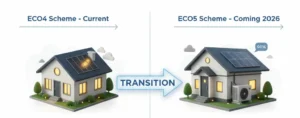
March 2026 marks the end of this scheme, and in April, the ECO5 scheme takes its place. What this means is potential changes in focus and eligibility criteria for households and landlords looking to improve the energy efficiency of their properties.
So what are these potential changes? And will the ECO application process or eligibility change for landlords and homeowners? Here’s what you should be aware of.
What Is the ECO5 Scheme?
At its core, the ECO5 scheme is a continuation of ECO4, which has been benefiting low-income and vulnerable households up and down the UK. So far, through the energy efficiency upgrades offered to those eligible, ECO4 has helped to reduce energy bills, reduce fuel poverty, and even lessen the impact of weather and cold-impacted health issues.
For each iteration of the ECO scheme, the focus and eligibility criteria have changed. For example, during ECO3 (introduced in 2018), it increased its reach in comparison to ECO2, adding new measures and benefits to qualify households for upgrades.
So what will ECO5 look like?
There’s currently not much official information available about the ECO5 scheme, and the UK government is in consultation about whether to extend the ECO4 scheme for a period of 6 to 9 months, and so we may only see information released in 2026. However, we can safely assume that the next iteration of ECO will:
- Maintain its function of providing funding for energy efficiency upgrades for low-income households.
- Support reducing carbon emissions and ensure the UK can meet its climate goals.
- Reduce the energy bills of those eligible for funding.
We may see a potential refocus towards more advanced, integrated energy efficiency upgrades and more emphasis on ensuring energy is obtained from renewable sources.
How May ECO5 Differ From ECO4?
If we consider the UK government’s climate targets - namely the UK’s Net Zero Strategy, which is targeting a 68% reduction in greenhouse gas emissions by 2030 compared to 1990 levels - then we can propose that ECO5 may focus on the technology and innovation needed to hit this target.
It may include these focuses:
Carbon Targeting
We may see ECO5 prioritising homes with the largest carbon footprints or the lowest EPC ratings, ensuring that those households with the worst energy efficiency are dealt with first.
New Technology
While the focus of ECO4 concentrated on heating systems, insulation, and boiler replacements (among other upgrades), ECO5 may see an additional need to utilise renewable energy generation. We may see more use of heat pumps, solar panels, and integrated smart controls for homes, which will help to decrease the dependency on fossil fuels.
Accounting for Location
Rural homes, or homes in colder, wetter areas of the UK (such as the North West) can face higher heating costs. We might see ECO5 giving properties in such locations priority for heating upgrades, and so eligibility may no longer be solely based on income.
ECO5 Scheme Eligibility
The ECO4 scheme currently has a wide base of eligibility criteria. With the ECO5 scheme, there is a likelihood of the eligibility criteria widening in order for more households to potentially benefit. As every iteration has changed and refined its criteria, we can most likely expect this to be the case again.
Changes to ECO5 eligibility may be seen in the following ways:
More Priority for Tenants and Landlords
ECO4 had a large focus on providing for low-income and vulnerable homeowners. We might see a more balanced focus during ECO5, where the number of successful projects for tenants and landlords increases to improve the energy efficiency of the entire rental sector.
Please explore our guides on ECO4 for tenants and for landlords to find out more about the current eligibility criteria.
Increasing Total Eligibility
Some stakeholders are considering the possibility of allowing middle-income households, or households just above the current income threshold, access to the ECO5 scheme and subsequent upgrades. When considering the UK’s Net Zero Strategy, this makes a lot of sense, as the greater amount of energy efficiency upgrades that can be installed, the greater reductions in emissions we shall see.
Emphasising Specific Vulnerable Groups
ECO4 eligibility can be based on vulnerability that comes from health problems. ECO5 scheme eligibility may emphasise this, providing increased support for the elderly, individuals with health conditions, and families with young children. This would further ensure that support is going to those most vulnerable to cold-exacerbated health problems.
How To Prepare For the ECO5 Scheme
Many of you who think you might be eligible for ECO4, and maybe ECO5, but aren’t set on applying for funding yet, can prepare for the ECO5 scheme. Do this by following these steps:
- Assess your energy use: Check your EPC rating if possible, and note down the make, model, and year of your central heating system. Additionally, if you’re able, assess whether your walls or roof have proper insulation. Finally, discover how much you spend on energy every month and cross-reference this with average energy spend in your area.
- Research energy efficiency upgrades: While you might not be ready to apply for funding, you can always look into what upgrades may be available to you. Read our article on current offerings here.
- Keep up to date with ECO news or contact an expert: Research ECO4 and ECO5 is a great way to begin understanding what the ECO scheme is and how you can approach it. Additionally or alternatively, arrange a call with an energy efficiency solutions provider who can provide you with the necessary details.
In conclusion, while the ECO5 scheme is still in the consultation phase, we can presume that it will be based on providing increased support for vulnerable households, such as those that are low-income or those that include a member who is negatively affected by a cold property.
If you think you could be eligible for either ECO4 or ECO5 funding, why not schedule a call with our experienced professionals today?
Find Out More About ECO or Check Your Eligibility
Before ECO5 comes into affect in 2026, you could be eligible for ECO4 funding.
If you’re unsure about whether you could apply, get in touch today. Our trusted experts will ascertain whether you’ll be able to make the most of this scheme.
Contact us today, and we will have our in-house qualified assessors evaluate your property to see what energy efficiency installations could be available for you.